
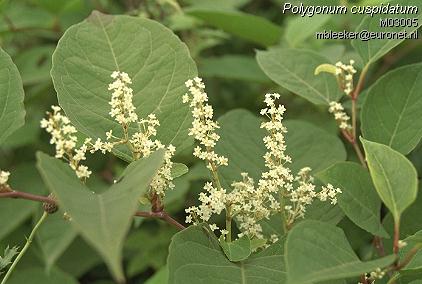
Photo ©2002 Marco Bleeker
Click any photo for a larger image
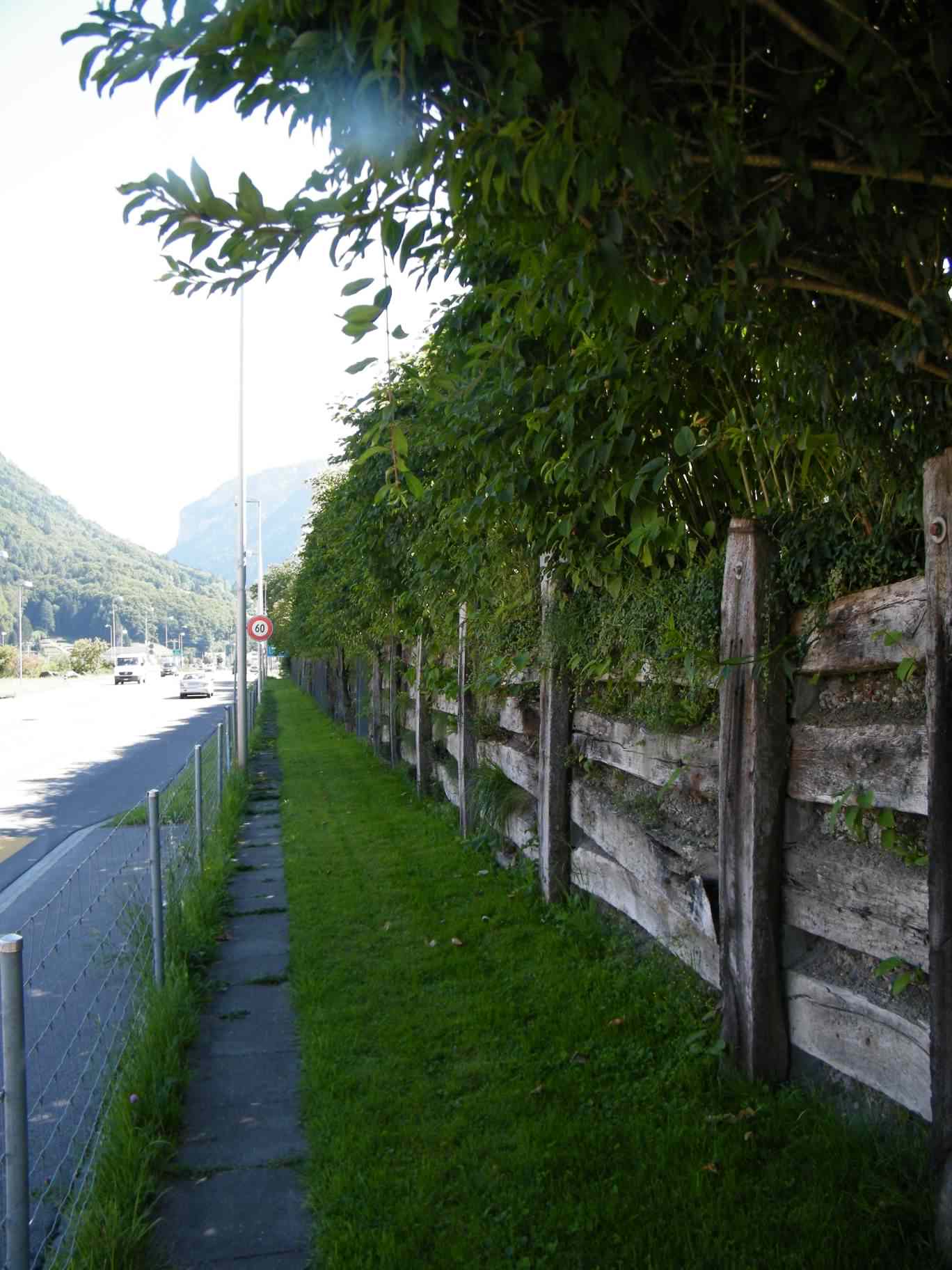
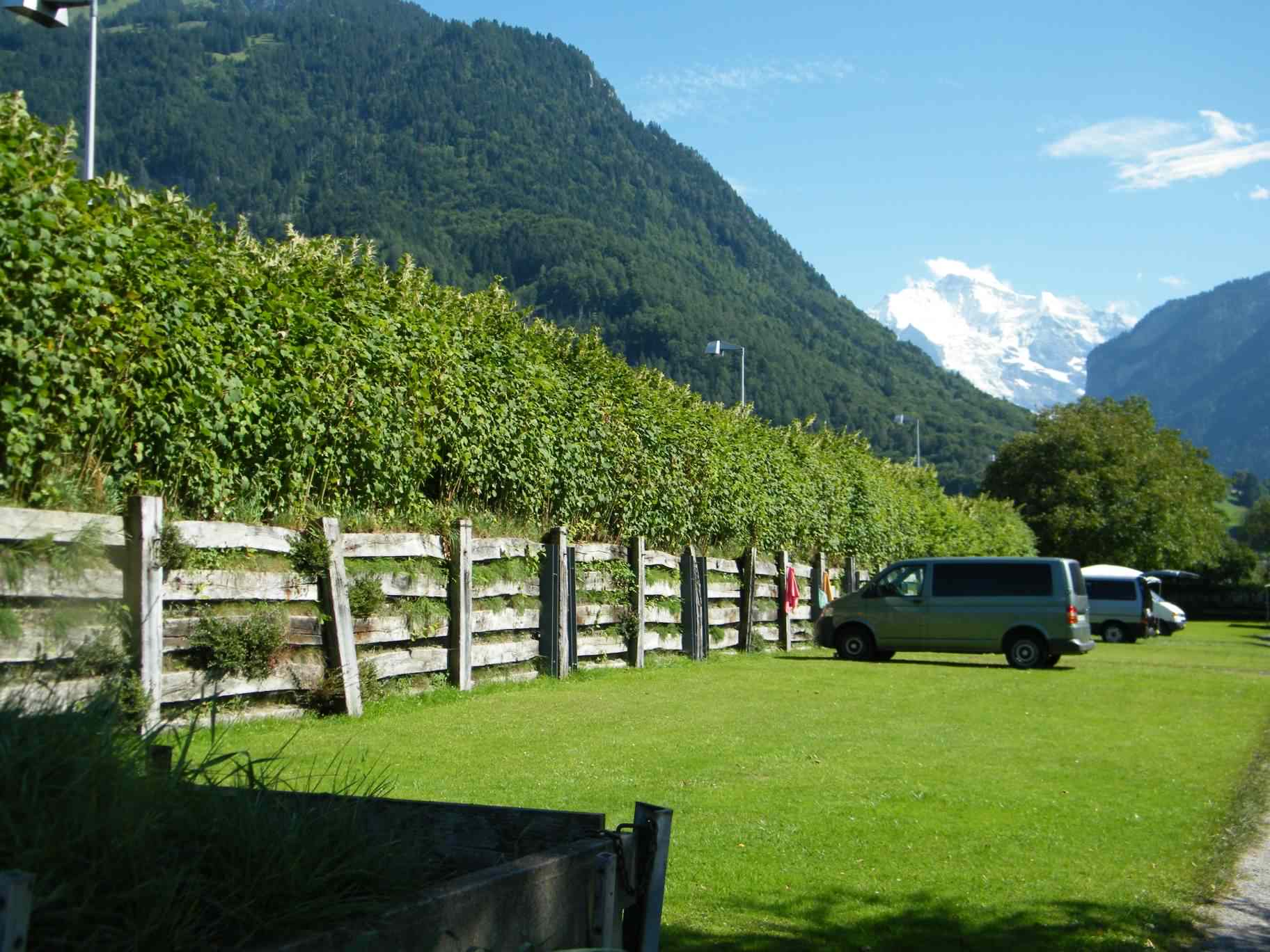
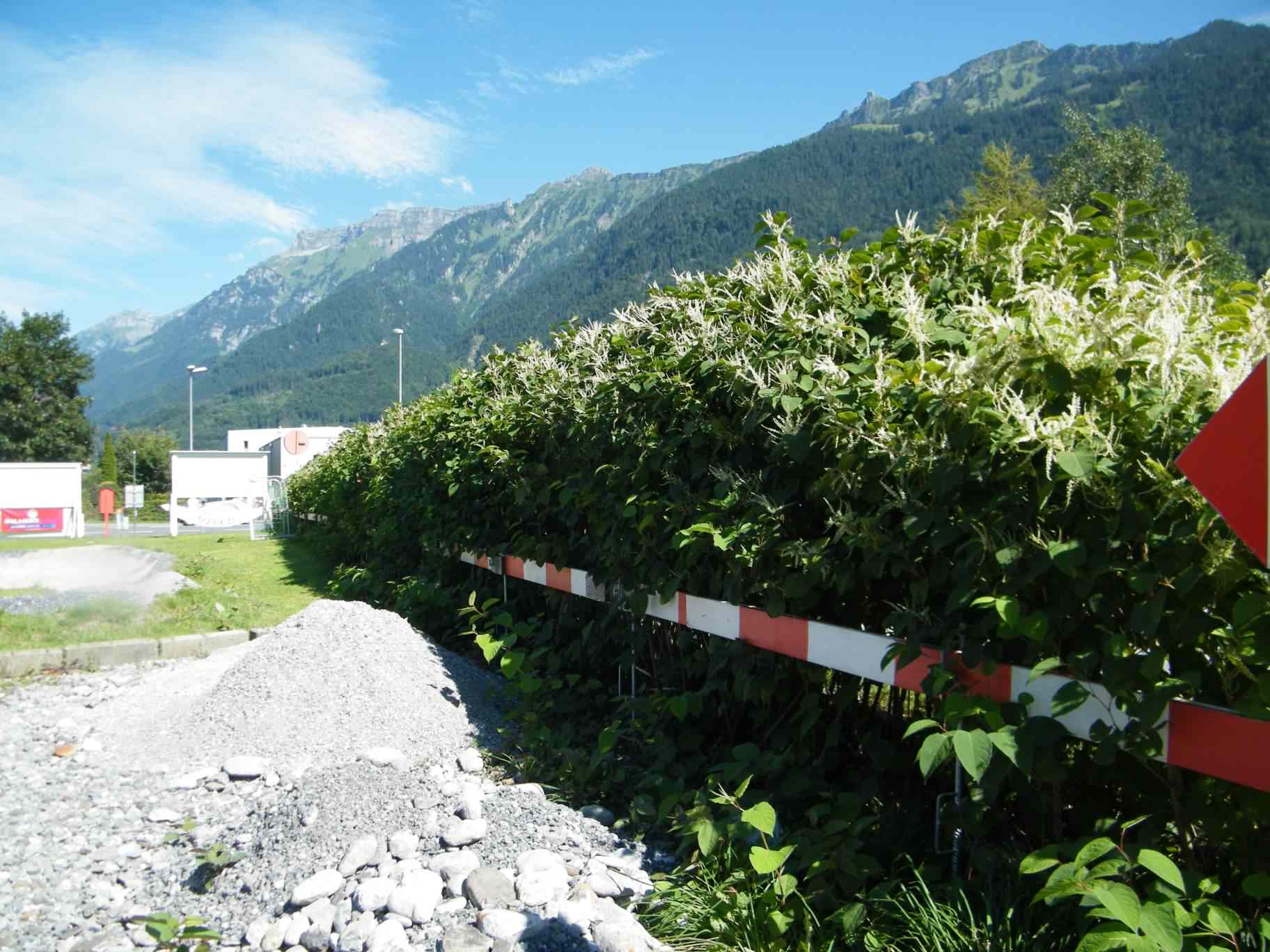
Knotweed as hedging in Switzerland
Three photos above ©2014 FBCP

Philip Siebold - the man who
introduced Japanese Knotweed to Europe
Photo ©2014 Cornwall Knotweed Forum
|
Photo ©2002 Marco Bleeker |
Click any photo for a larger image |
|
Knotweed as hedging in Switzerland Three photos above ©2014 FBCP |
Philip Siebold - the man who introduced Japanese Knotweed to Europe Photo ©2014 Cornwall Knotweed Forum |
Japanese Knotweed - Reynoutria japonica
Family - Polygonaceae
Also known as -
Donkey or Gypsy rhubarb, Mexican bamboo,
Japanese bamboo, Japanese Fleece Flower
 - Recent reforms of the Anti-social Behaviour, Crime and Policing Act have added several "Invasive species" to the list of items in the act. (website, local pdf copy.) Japanese Knotweed, Giant Hogweed and Himalayan Balsam are all covered in the latest literature with any breach, of any requirement, of a community protection notice subject to a fixed penalty notice (£100) and/or prosecution which on conviction an individual would be liable to a level 4 fine (£2,500), and an organisation, such as a company would be liable to a fine not exceeding £20,000.
Known Japanese Knotweed locations in our local area, with either Google Streetview locations or maps.
Identification of Japanese Knotweed - data.
A perennial of the family Polygonacae ("Poly" - many, "gony" - knee or joint), commonly called "itadori" in Japan, a name meaning "strong plant". Japanese Knotweed is an invasive fast growing plant reaching up to 2.5m (8ft) on thick bamboo like stems, commonly seen near roadsides, in ditches and on waste ground. Large triangular leaves with curved edges and a pointed tip on red green stems with a pale zig–zag pattern, greenish white flowers in slender clusters appearing from the leaf bases during August to October. New shoots appear March to April growing rapidly to full height, at roadsides, ditches and streams where broken parts of the root system can be transported to new sites, establishing a new plant system extremely easily. It will regenerate from pieces as small as 2cm (0.8in) in soil or in water, its growth is very aggressive, with an extensive and deep underground rhizome system giving it great resistance to eradication. It has a Bamboo like stand–forming habit producing a dense canopy beneath which few other plant species can survive, an accumulation of growth debris within established stands further reduces other species diversity. Knotweed reproduces primarily through its root system, which may reach 18m (60ft) in length, and is quite capable of growing through tarmac, concrete and paving, doing extensive damage as it spreads.
A dioecious plant so there are male and female flowers on separate plants, it has been proposed that the majority of the plants outside their native Japanese habitat are female and are of a single clone, presumably from when it was introduced originally in the mid–19th century as an ornamental garden plant. This weed is one of a number listed under Schedule nine of the 1981 Wildlife and Countryside Act, it being an offence in the UK[1] to plant it or otherwise cause it to grow. Waste material when digging should be disposed of according to the Environmental Protection Act 1990 (Duty of Care) Regulations. The Environment Agency has published a free guidance booklet, "The Control of Invasive Plants near Watercourses". Copies are available from Environment Agency offices.
Knotweed can be resistant to some weed killers but Glyphosate (the active ingredient in Roundup) or 2,4–D seems to work well. This should be done on established growth and then at repeated intervals with late season spraying being most effective when the plant "shuts down" for the winter period. Use of such chemicals requires careful use and knowledge of herbicides and their effects. It may be more effective when applied to the regrowth of cut stems, but may need repeated treatment over a three year period. Injecting Glyphosate into the hollow stems after cutting is another method of treatment which is said to work well but is very labour intensive. Glyphosate is a non–selective weedkiller and extreme care should be taken in its use especially in the vicinity of water courses, streams, ponds and the like.
Contrary to current guidance and advice, Japanese Knotweed can be effectively eradicated by repeated cutting, which exhausts the rhizomes, after an initial clearance and composting or burning of the cuttings on site (burning may require environmental licences or exemption certificates). This should be done only on site so the plant is not being transported, thereby avoiding possible repercussions under the 1981 Wildlife and Countryside Act from such transportation. Where this cannot be done a licence to transport cut Knotweed is required. Cut bi–weekly (or sooner if growth rates are high) in the first year until growth stops in the autumn and then as required until no regrowth has been seen for at least a year or more, this process can take upwards of three years but requires little effort after the first clearance as each cut is a quick run over with a strimmer, mower or bill hook, however extreme care is required if powered cutting machinery is used so that cut Knotweed is not thrown elsewhere risking a transfer situation. Digging as an alternative to chemical control is difficult and costly as the plant has an extensive root structure and will root from the smallest portion left behind, so needing extreme care to ensure that all parts of the root system are found. Where burning is not possible the cut growth can be left to rot naturally but again care is needed to ensure that the cuttings are not moved inadvertently. Brickfields Country Park has successfully eradicated Japanese Knotweed on site using this regime of an initial cut and composting with repeated cutting. We have seen this system successfully used multiple times.
Recently another local Japanese Knotweed stand of several square meters in a very difficult location where it was growing through gabions along a stream bank, where removal would have been very difficult and costly, have shown that when subjected to an initial clearance and then regular hand cutting, the plant was eradicated in two years without the need to dig the plant up or obtain the special licences for transportation. However such a regime may only be useful in certain locations, E.G. - Knotweed stands on stream banks could be spread by cutting as parts are transported downstream in the water. Stands of Knotweed growing under a neighbours fence would need to be dealt with by both parties at the same time. Time is is the main consideration as you will need time to kill the plant and a further period to confirm its non–regrowth. Given this luxury of time we have seen many times that Japanese Knotweed can be beaten solely by a carefully managed cutting regime.
Historically classified as Reynoutria japonica by Houttuyn in 1777, and Polygonum cuspidatum by Siebold in 1846, recent suggestions are that it should be reclassified as Fallopia japonica.
FBCP do not advise or recommend that Japanese Knotweed – Reynoutria japonica is eaten or used as an herbal remedy. Japanese Knotweed is listed as a wild edible plant, young shoots up to 30cm (1ft) can be cut early in the spring, steamed or boiled and served like asparagus. Slightly older stems can be used to make a rhubarb–like jam by peeling and boiling the sour rind with sugar and pectin.
Site design ©1999– Brickfields Country Park - Privacy -