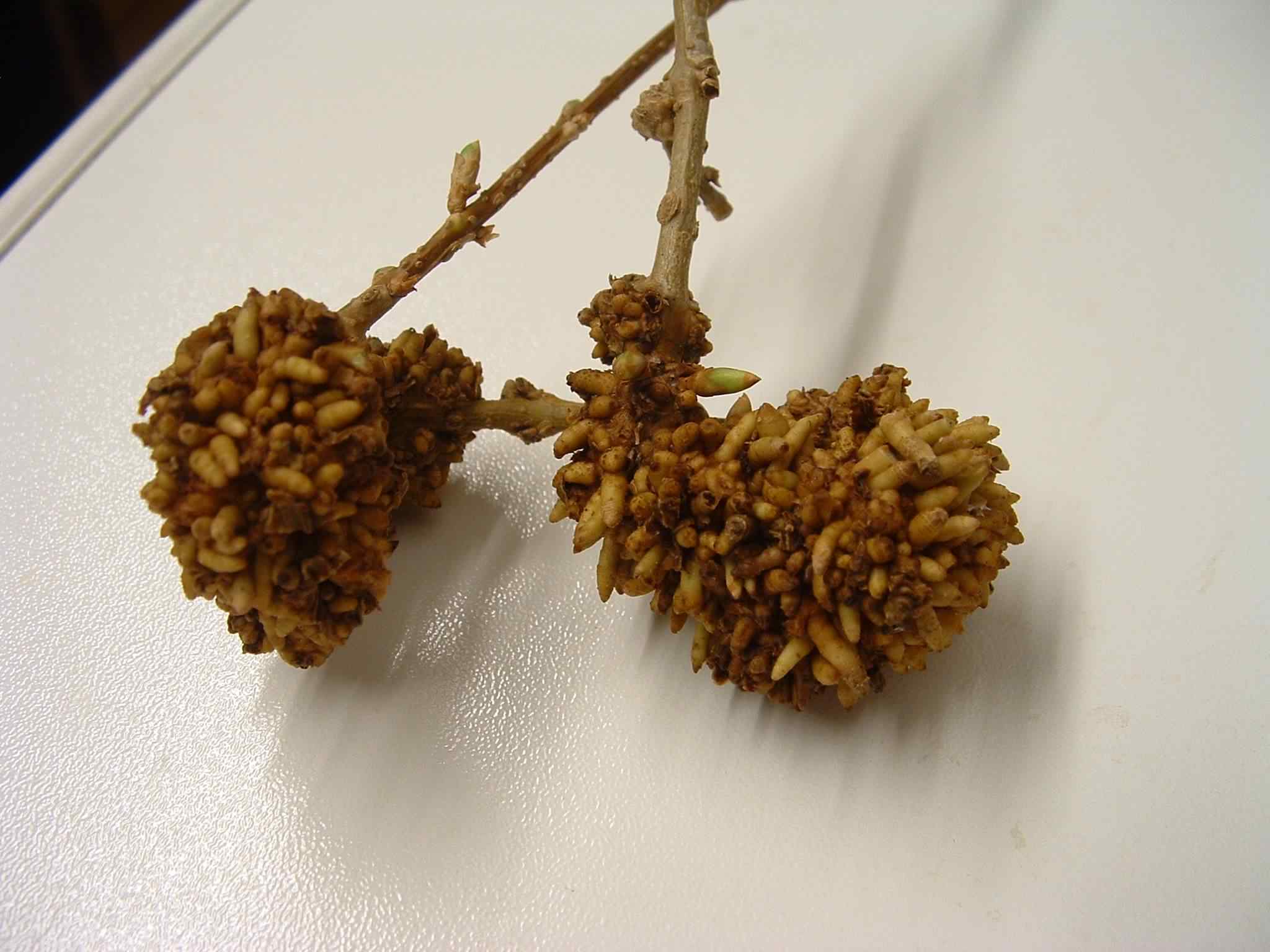
Forsythia Galls
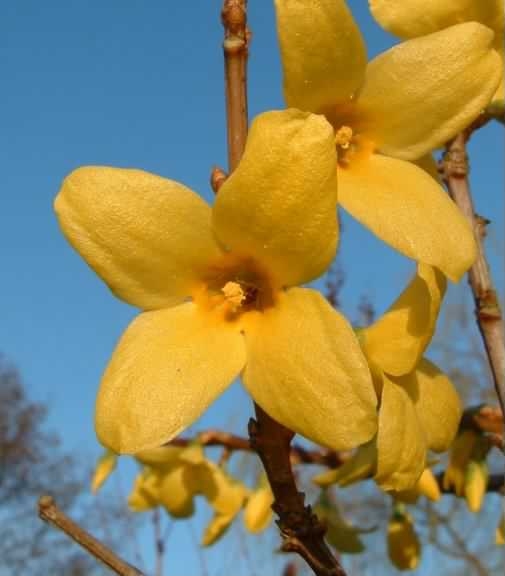
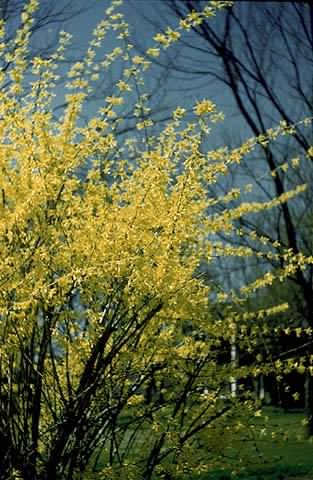
Photo ©1999,
Two above Photos ©2003–
Click photos for a larger image
Forsythia - Forsythia suspensa
Family - Oleaceae
An early flowering deciduous shrub growing to 3m (10ft) tall by 4.5m (15ft) across, on thin woody stems flowering in the spring before the leaves appear. Profuse flowers 2–5cm (1–2in) are bright golden yellow, bell shaped with 4 narrow petals appearing in March and April in groups of one to three at each node along the branch, oval pointed leaves 5–10cm long (2–4in) with serrulate edges appearing later once the flowers have opened.
Now found almost anywhere the Forsythia originated in China. They can take full sun or light shade, doing best in well drained soils with supplementary watering during prolonged dry spells. Cuttings taken from green shoots in spring or early summer are easily rooted in moist sand. Prune old woody growth at ground level to help maintain a vigorous plant by stimulating the growth of new stems. Prune after flowering finishes as next years flowers are produced on stems that grow during the current summer. Stems are light brown in colour, have a rough coarse "gritty" feel (from raised lenticels) and are hollow between the flowering nodes. First introduced into Europe in the early 1800's, there are seven species of Forsythia and five wild variants, and currently 41 cultivars are listed, all of which are deciduous shrubs with yellow flowers appearing in the spring.
Forsythia can suffer from tumour like swellings to the plant's stems caused by a fungus infecting the plant through wounds or irregular surfaces. These growths, called galls, when round, are attributed to the Phomopsis spp. fungi, whereas elongated growths that look like new shoots are attributed to Corynebacterium fascians, common on stems of Forsythia, but also occurring on Apple. To prevent the spread of the disease destroy heavily affected plants by burning, with lesser infections you may be able to prune out the affected parts but this might not remedy the problem. Disinfect any tools used with household bleach or commercial disinfectant such as Izal.
BCP do not advise or recommend that any part of Forsythia – Forsythia suspensa is eaten or used as an herbal remedy. Seeds of the Forsythia have been used for medicinal purposes having anti–bacterial, anti–fungal and other properties.
Forsythia Galls |
|
Photo ©1999, |
Two above Photos ©2003– Click photos for a larger image | ||
Site design ©1999– Brickfields Country Park - Privacy -