Photo ©2011–
Click photo for a larger image

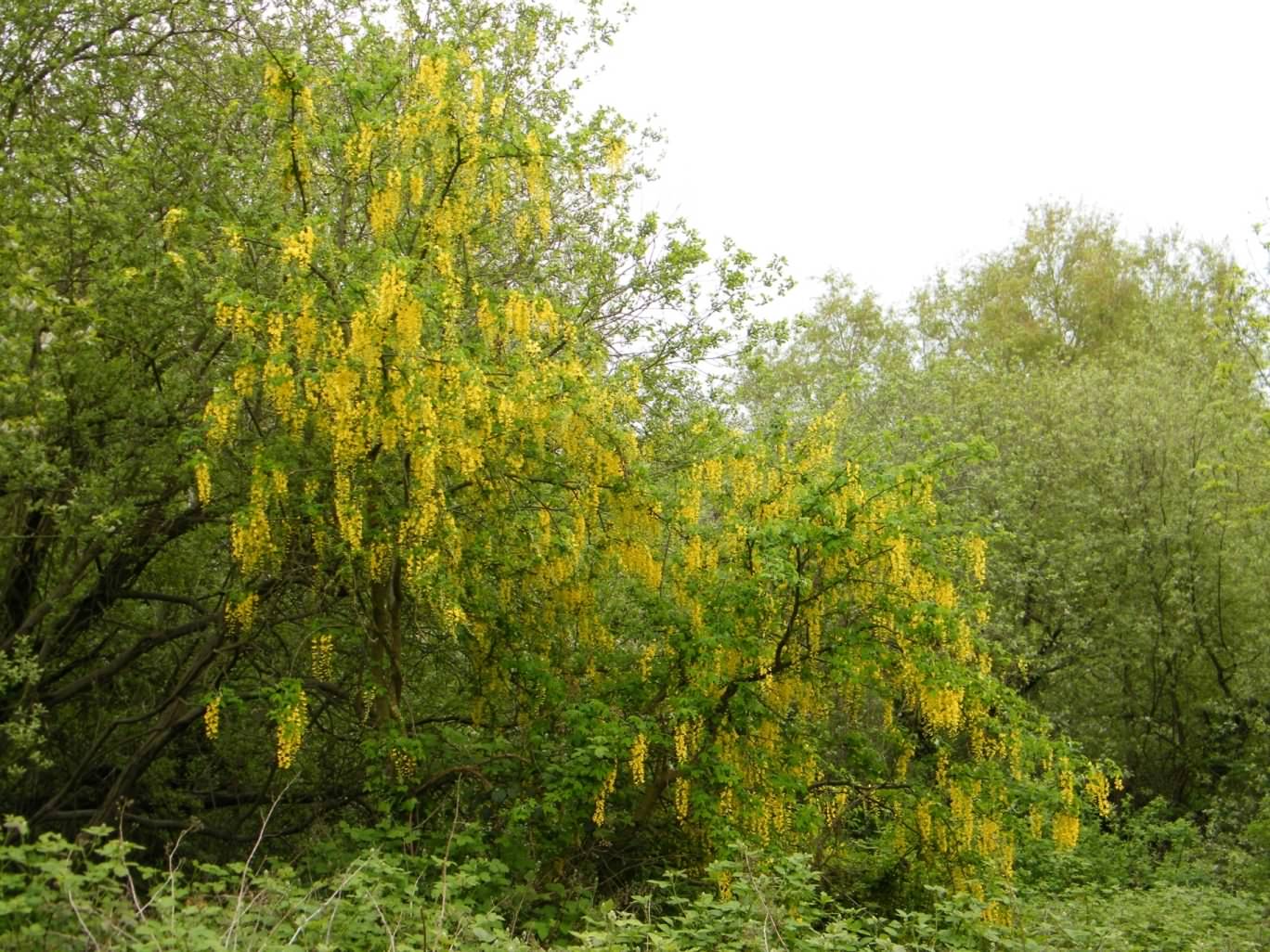
Laburnum - Laburnum anagyroides
Family - Fabaceae
Also known as - Golden Chain, Bean tree
Photo ©2011–
Click photo for a larger image
This tree is poisonous
Native of central and Southern Europe, A small deciduous tree or bush growing to 3m (10ft). Leaves of three rounded elliptical leaflets on long stems, finely haired underneath when young, grey–green to deep green in colour. Dark grey shallow fissured bark. Masses of yellow flowers in early summer similar to Sweet pea, 2.5cm (1in) long in dense hanging terminal clusters 25–50cm (10–20in) long. Black seeds in clusters of long flattened brown hairy pod up to 7.5cm (3in) long. Young seed pods can look like green peas.
A native of the mountains of France, Switzerland, southern Germany, northern Italy, it was introduced into North–East America by the European colonists. Heart wood of the laburnum is a dark reddish–brown colour, hard and durable, and polishes well, used with other coloured woods for inlaying purposes. The laburnum has also been called false ebony from this character of its wood.
All parts of the plant contain the alkaloid poison Cytisine producing the following symptoms if eaten; vomiting, diarrhoea, drowsiness, weakness, sweating, pallor, headache, dilated pupils, and rapid heartbeat. Laburnum is highly toxic and could be fatal if eaten.
Site design ©1999– Brickfields Country Park - Privacy -