
Photos ©2004–
Click any photo for a larger image
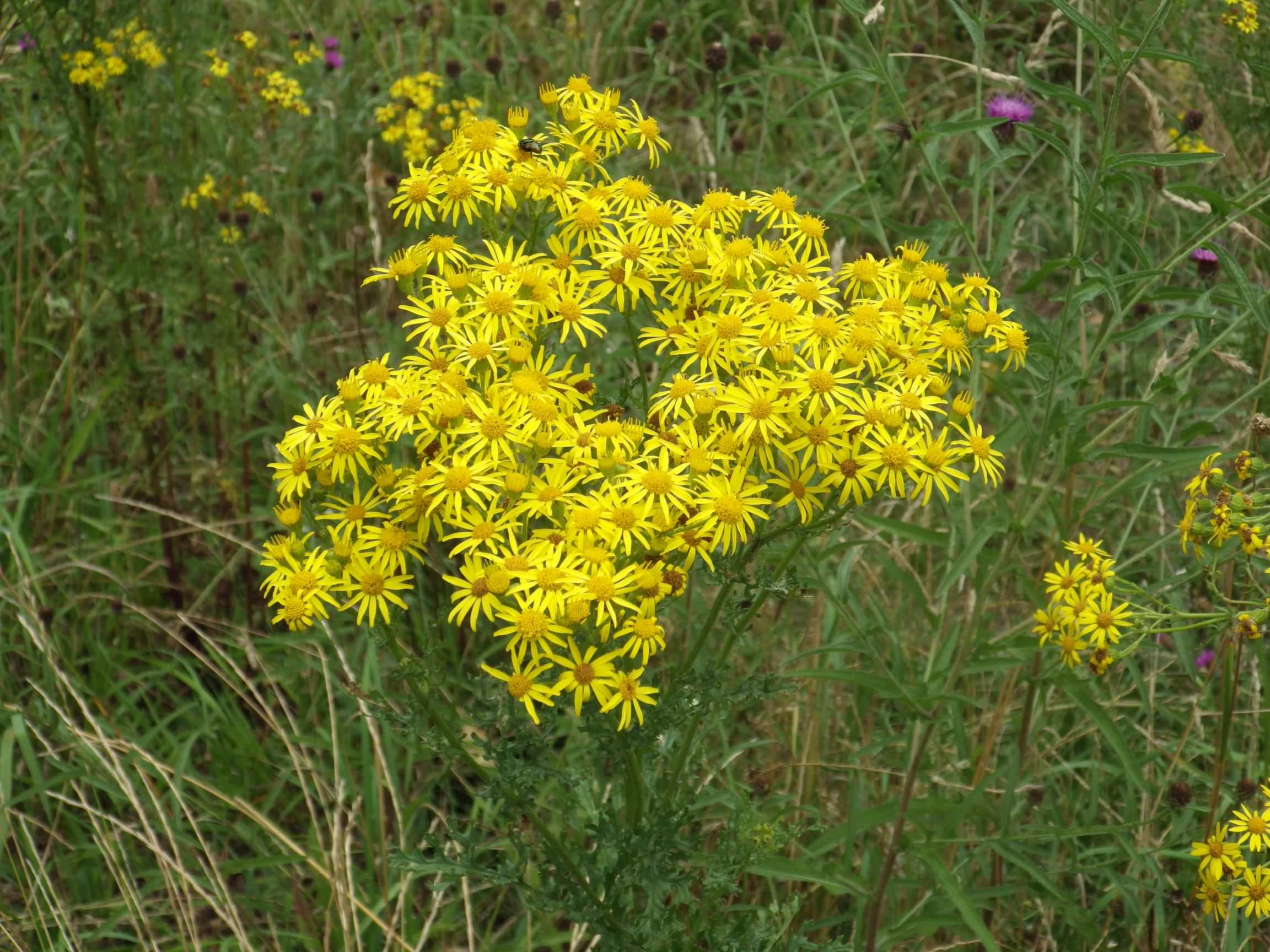

Photo ©2007 Svdmolen
Cinnabar moth

|
Photos ©2004– Click any photo for a larger image |
|
Photo ©2007 Svdmolen Cinnabar moth |
Common Ragwort - Jacobaea vulgaris
Family - Asteraceae
Syn. - Senecio jacobaea
This plant is poisonous
A poisonous perennial or biennial of grassland, meadows, forest margins and roadsides, grows to a height of 30cm up to 1m (1–3ft) depending on variety, widespread and common throughout the country. Erect leafy stems branched in upper section. Variable leaves usually a deep bottle–green with a purple hue and slightly glossy on the upper surface are pinnately lobed, stem leaves sessile with a blunt end lobe with the bases clasping the non–woody main stem. Flat topped clusters of daisy like yellow flower heads, 15–25mm (0.6–1in) across, of bright yellow daisy–like flower heads appear June - November. Ragwort and associated plants are the main food plant for the Cinnabar moth.
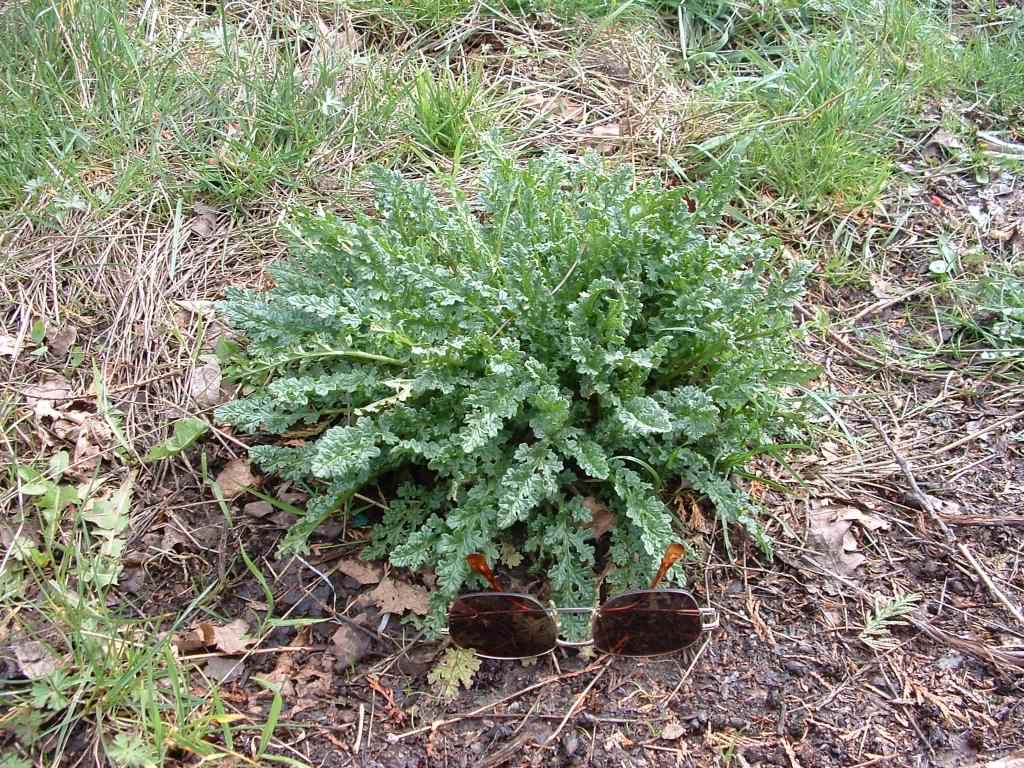
First year growth as low rosettes on bare ground during autumn to early June, leaves extremely variable. In the second and subsequent years the rosettes mature, producing flowering stems from late June onwards. The flowering stems die back during October after producing around 10,000–40,000 seeds per plant "fluffy" seeds. The seeds can lie dormant for many years. Damage to the crown can make Ragwort revert to perennial growth patterns. It is poisonous to cattle and horses (info), but the leaves and flowers are apparently reasonably palatable to sheep. Can be controlled by manual pulling or herbicide treatment (control), although pulling Ragwort may actually promote the spread of Ragwort due to rooted sections of the plant regrowing. Ragwort is one of the "Prescribed" injurious weeds in the Weeds Act 1959 and landowners could be ordered to deal with it, however it is not illegal to have it growing and landowners are not obliged to remove it. Ragwort is one of five plants included in the Weeds Act, the full list is; Common Ragwort, Spear Thistle, Creeping Thistle, Curled dock and Broad–leaved dock.
BCP do not advise or recommend that Common Ragwort – Jacobaea vulgaris is eaten or used as an herbal remedy. All of the plant contains an alkaloid poison which will cause irreversible liver damage, the poison is not destroyed by drying or storing. With a bitter taste most animals will avoid eating it, if grazing becomes scarce however, they may eat it especially if it is cut and left on the ground as it becomes more palatable. Ragwort missed in the field and mechanically baled with hay or mixed with silage can be dangerous although relatively large amounts need to be consumed. Recovery is possible if caught early, as the liver can regenerate itself to some degree. Symptoms of Ragwort poisoning in livestock are weight loss, lack of appetite, diarrhoea, abdominal pain, restlessness and convulsions.
DEFRA Code of practice for Ragwort, including identification of Ragwort and similar common plants, our local pdf copy of the document.
Site design ©1999– Brickfields Country Park - Privacy -