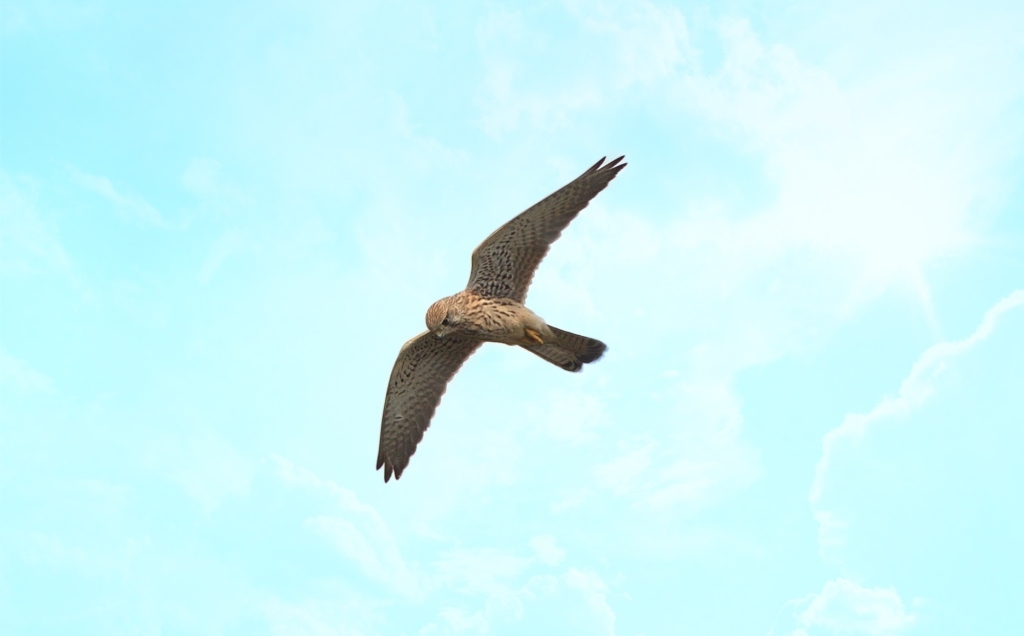
Photo ©2020 Colin Varndell
Click any photo for a larger image
Video ©2016–
Sparrowhawk - Accipiter nisus
Family - Accipitridae
Also known as - the Eurasian Sparrowhawk
Photo ©2020 Colin Varndell
Click any photo for a larger image
Video ©2016–
A Common bird of prey in woodlands throughout Europe and northern Asia, it is often seen hovering high over its intended prey in open country and at roadside verges. Common in the British Isles, where it inhabits woodlands and farm country, feeding principally on small birds. The male is about 28cm (11in) long, and the female 38cm (15in) long with a wing span of 60–80cm (23–32in). The male feathers are dark on the top and light brown on the breast while the female breast is almost fully white. Breeds throughout the North America and Europe and Asia, migrating farther south for the winter.
Lives in more open areas and builds its nest in hollow trees usually in coniferous woodland. its food consists of insects, small mammals, birds, spiders, reptiles, grasshoppers, crickets, beetles, and caterpillars using its strong talons to catch its prey. Wings are rather pointed, the tail is long and heavily banded. Flight consists of series of short wing strokes followed by a glide. While the male hunts mostly sparrows and tits, the larger female often feeds on larger prey like Starlings or thrushes. Occasionally the sparrow–hawk also eats mice or large insects. The bill is blue, furnished with bristles at the base, which overhang the nostrils, eyes are bright orange
Lays 4–6 brown–speckled eggs brooded for about five weeks. Hatchlings are fed by the female for about a month with food the male brings to the nest. Once fledged they return to the nest at night. In China the sparrow–hawk was associated with autumn whilst in ancient Egypt, Greece and the Roman Empire it was a symbol of the powers of the Sun. Sparrowhawks belong to the genus Accipiter of the family Accipitridae, order Falconiformes.
13/09/2016 10:30, Sparrowhawk catches and eats a pigeon.
Site design ©1999– Brickfields Country Park - Privacy -