Photo ©2013–
Click for a larger image
More photos
Photo ©2013–
Click for a larger image
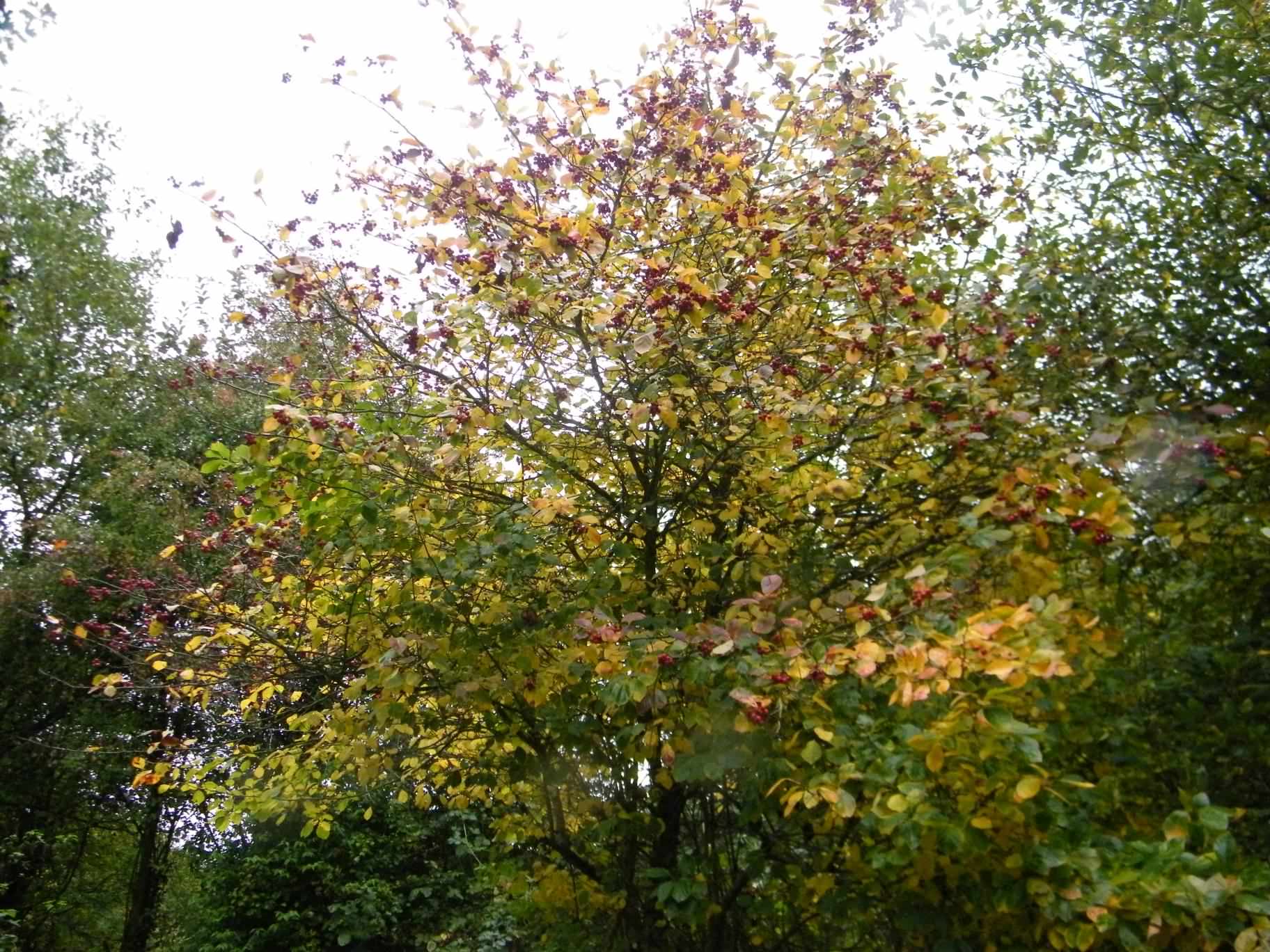
Whitebeam - Sorbus aria
Family - Rosaceae
Also known as - Fionncholl (Ireland), Chess Apple, Quickbeam, White Hazel
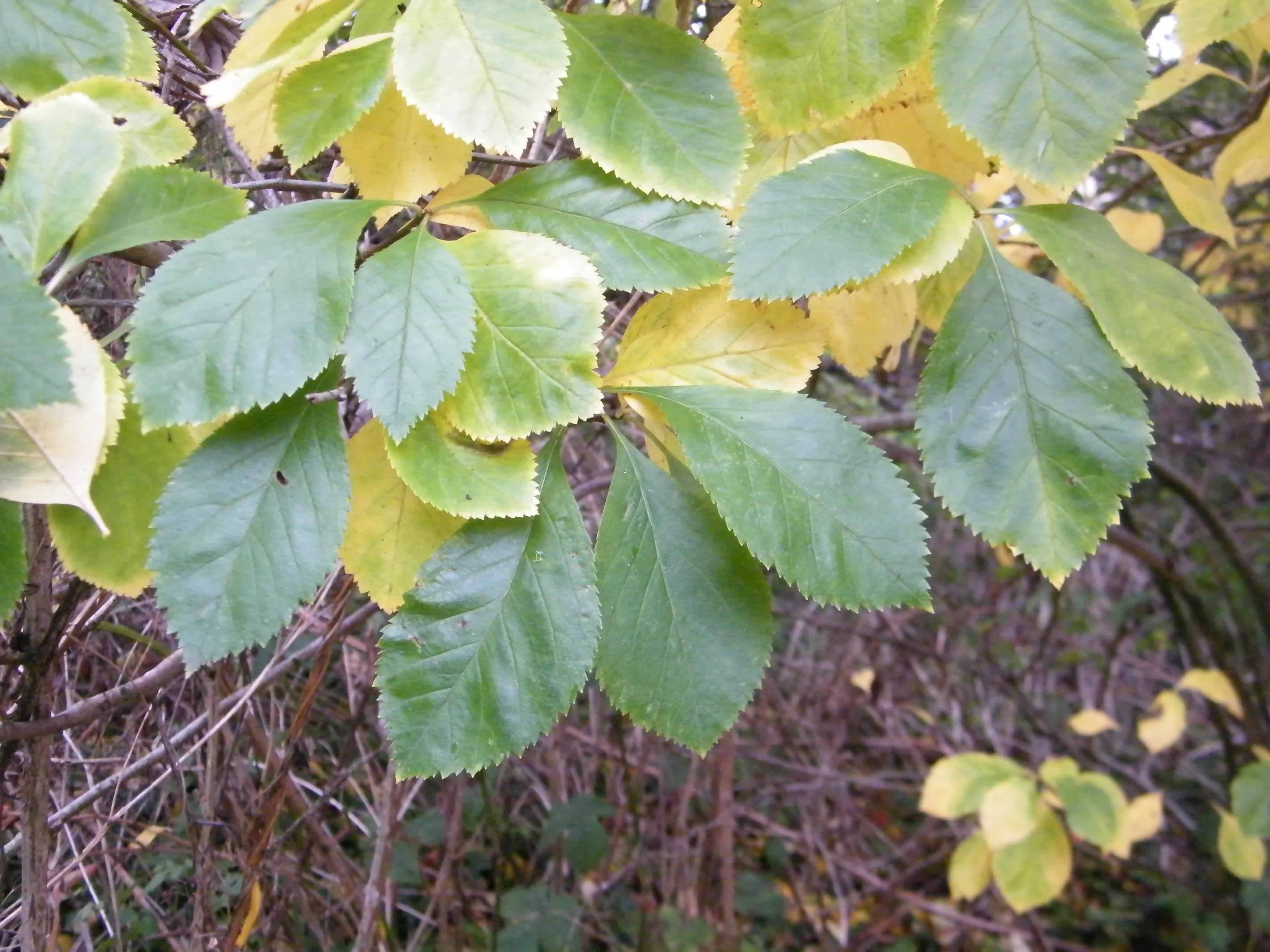
A native deciduous tree, although rare in the wild, related to the Rowan, with a small rounded crown growing to a height of 15m (50ft) in woodland, scrub and hedgerows. Planted as a decorative tree in parks, gardens and open areas, and found in the wild over Southern England, Central and Southern Europe and western Ireland, in association with Ash, Beech, Field Maple, Hawthorn and Wych Elm. A compact tree with a lifespan of about 80 years, Whitebeam has a grey, shallowly fissured bark. Alternate oval veined and finely toothed dark green leaves above, with a white dense hairy felt underneath, 8–12cm (3–4.75in) in length on stalks 7–20mm (0.25–0.8in) long, turning golden in autumn. Leaf buds are green and pointed looking rather like magnolia flowers, the bark and twigs are smooth and grey. Timber from Whitebeam is a pale brown quite hard wood of good quality, used for tool handles, turnery, furniture and plywood, and like apple it has been used for gears and wheels in machinery.
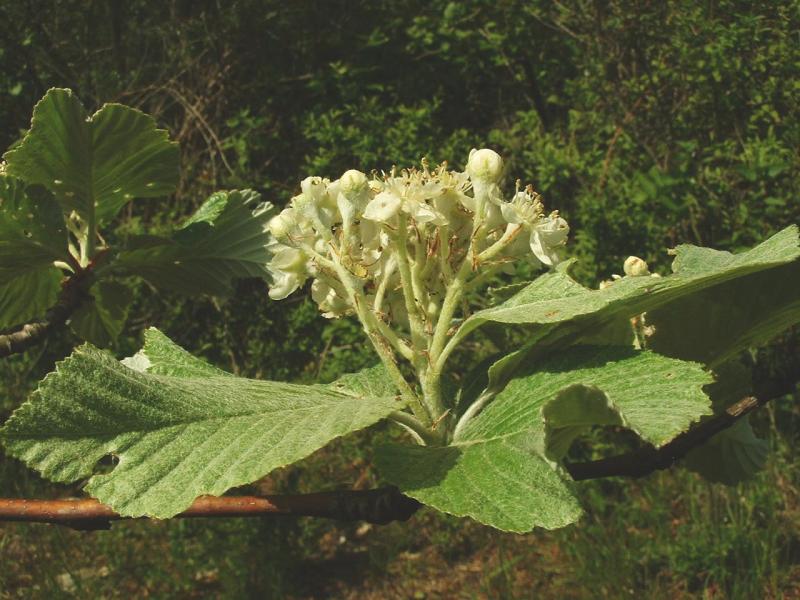
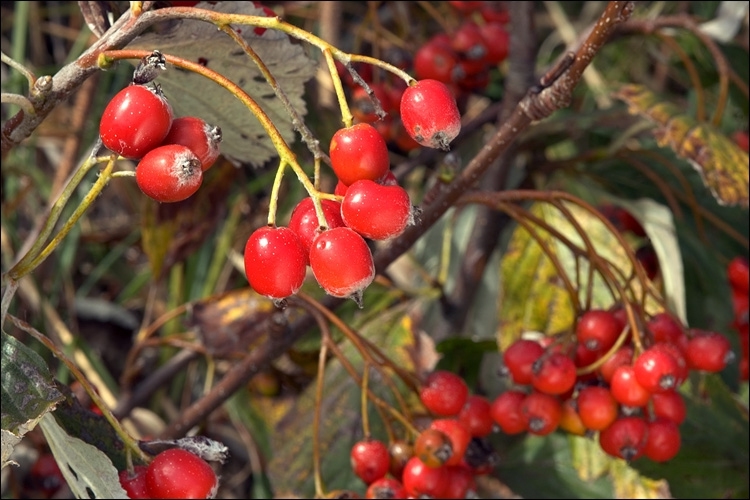
White, five petaled, sweet–scented flowers, 10–15mm (0.4–0.6in) across are arranged in dense branched flat–topped clusters, at the end of stems appearing in May to June. Globular berries, 8–15mm (0.3–0.6in) in diameter, are green at first, but change to bright red when ripe in September contain black seeds similar to Apple pips. Whitebeam Hybridises with other Sorbus species notably Rowan S. aucuparia and Wild Service tree S. torminalis, several commercial hybrids have gained the Royal Horticultural Society's Award of Garden Merit. Other varieties are found in South West England and South Wales and in Ireland. The berries are a favorite of birds, though less palatable than Rowan berries. Whitebeams are sometimes used as larva food plants by some Lepidoptera species including the Short–cloaked moth (Nola cucullatella). Confusingly Rowan is also known as Whitebeam.
BCP do not advise or recommend that Whitebeam Sorbus aria fruit is eaten. The fruit is edible and can be made into jam and wine, although this is best done very late in the season as they become sweeter. Some sources list them as only being edible when nearly rotten.
 |
 |
 |
| Photo ©2013– - Click any photo for a larger image |
Photo ©2004 Entomart | Photo ©2007 Dr. Amadej Trnkoczy |
Site design ©1999– Brickfields Country Park - Privacy -