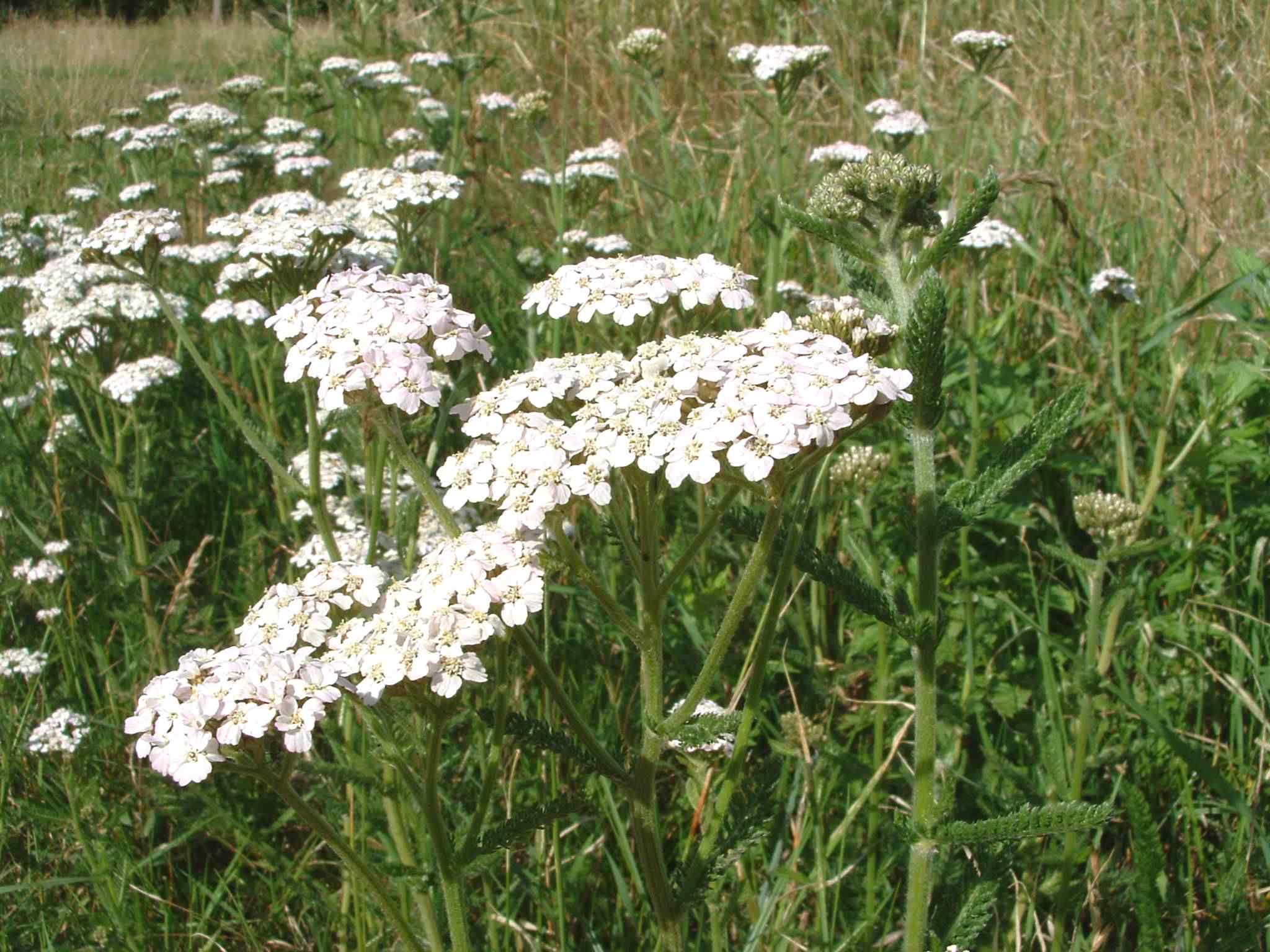
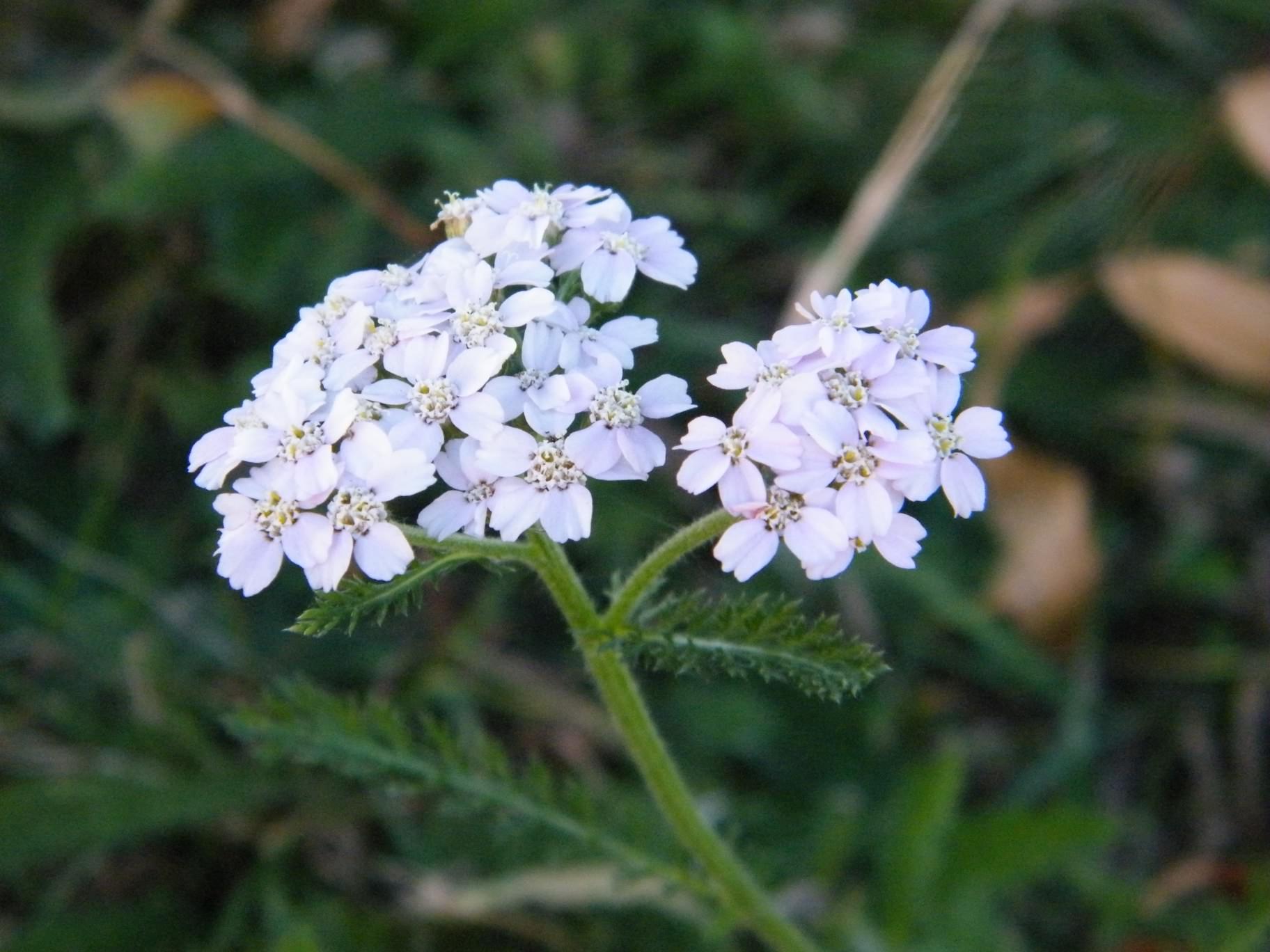
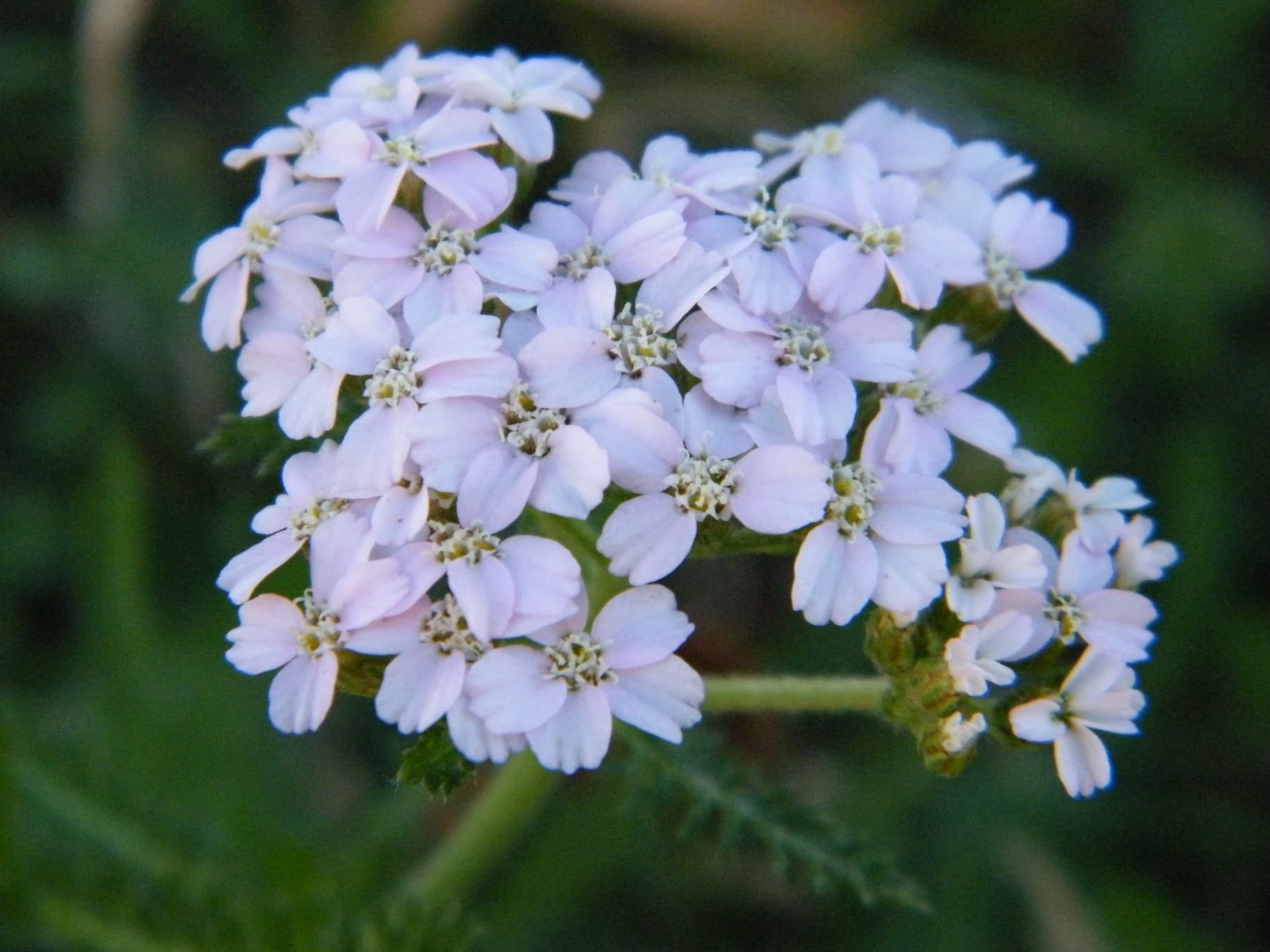
Yarrow - Achillea millefolium
Family - Asteraceae
Also known as - Thousand–leaf, Soldiers Woundwort, Old–man's–pepper
A hardy perennial native to Europe and naturalised in the US, (closely related? to A. lanulosa, Western or Wooly Yarrow). Found in grassy areas, roadsides, hedges & embankments in unimproved soils in full sun. Drought tolerant spreading quickly from a system of shallow roots and seed, can be invasive. Grows from rhizome to 90cm (3ft) tall with dark green finely divided leaves, from a basal rosette of feathery leaves. Hairy flower stalk with short unstalked alternate leaves. White, occasionally pinkish flowers in flat panicles, each flower about 6mm (0.25in) across of 4–6 toothed white ray petals surrounding a disk of shorter petals and a yellowish centre, attracting bees and butterflies.
BCP do not advise or recommend that any part of Yarrow – Achillea millefolium is eaten or used as an herbal remedy. Used in traditional medicine, it gets its genus name Achillea from the Greek Achilles, who, it is said used Yarrow to stop his men's wounds bleeding. It has antiseptic, styptic and anti–inflammatory properties used in poultices and ointments. It has a strong but pleasant smell, containing camphor and menthol, however handling Yarrow can lead to photo sensitive dermatitis.
|
|
|
| Click any photo for a larger image - Photos ©2004– | ||
Site design ©1999– Brickfields Country Park - Privacy -